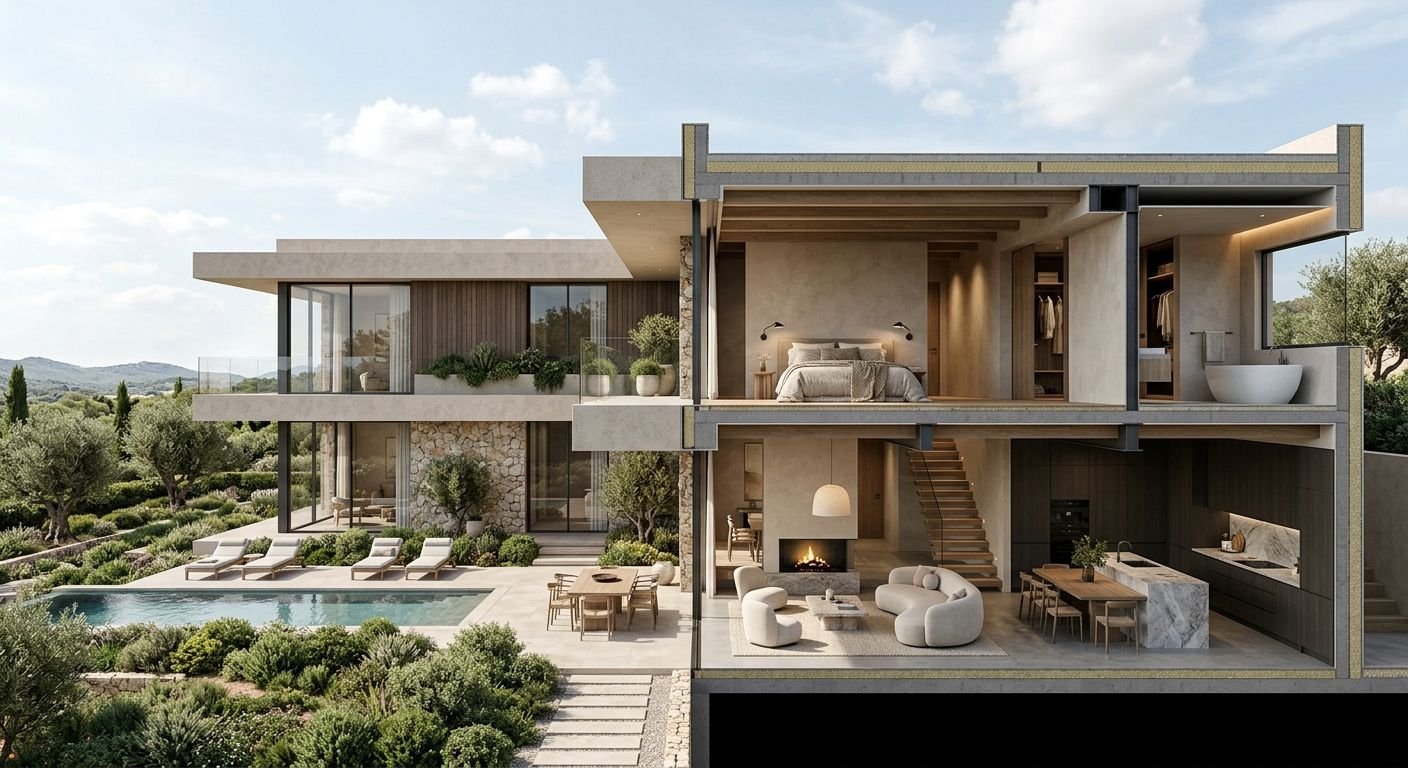
The Relationship Between Architecture and Interior Design
Architecture and interior design are closely connected disciplines. Architecture shapes the building and its spaces, while interior design develops how those spaces function, feel and respond to their users.
Architecture and interior design are often treated as separate disciplines, but successful buildings depend on a strong relationship between the two.
The architect develops the overall building, while the interior designer focuses more closely on the experience and functionality of its internal spaces. In practice, many decisions overlap and require continuous coordination.
What Does Architectural Design Address?
Architectural design deals with the building as a complete system. Depending on the project, the architect works on elements such as:
Site planning and building orientation.
Building form and massing.
Floor plans and circulation.
Facades and openings.
Relationship between indoor and outdoor spaces.
Coordination with structural and MEP systems.
Building regulations and technical requirements.
Architecture therefore establishes the main framework within which interior spaces exist.
What Does Interior Design Address?
Interior design develops the internal environment in greater detail.
It considers elements such as:
Furniture layouts.
Materials and finishes.
Lighting.
Ceilings.
Flooring.
Joinery and built-in furniture.
Colors and textures.
Ergonomics and user experience.
The Council for Interior Design Qualification (CIDQ) describes interior design as a profession involving the planning, design and management of interior environments, including considerations related to health, safety and welfare.
Where Do Architecture and Interior Design Meet?
The two disciplines overlap in many areas.
For example, the location of a window is an architectural decision, but it directly affects furniture placement, daylight and the atmosphere of the interior.
Likewise, a ceiling design may appear to be an interior-design element, but it must coordinate with air-conditioning ducts, lighting, sprinklers and structural constraints.
Other shared decisions include:
Door locations and dimensions.
Floor levels.
Staircases.
Kitchen and bathroom layouts.
Electrical and lighting points.
MEP locations.
Material transitions.
For this reason, interior design should ideally be considered early rather than treated as decoration added after the architectural design is complete.
Why Early Coordination Matters
Poor coordination can create practical problems during construction.
A beautifully designed interior may conflict with structural columns, air-conditioning systems or window locations. Similarly, an architectural plan developed without considering furniture may create spaces that technically work but are difficult to furnish effectively.
Early coordination allows both disciplines to influence the project before changes become expensive.
Architecture Creates the Space; Interior Design Develops the Experience
A simple way to understand the relationship is:
Architecture defines the space, while interior design develops how that space is experienced and used.
However, neither works completely independently.
The strongest projects are usually those where architecture, interiors, structure, MEP and landscape are considered as connected parts of one design.
Conclusion
Architecture and interior design are not competing disciplines. They operate at different scales while contributing to the same final environment.
When architectural planning and interior design are developed together, the result can be more functional, coordinated and visually coherent.
The goal is ultimately the same: creating spaces that work well for the people who use them.
References
NCARB — Architecture and the Architectural Profession: https://www.ncarb.org/
Council for Interior Design Qualification (CIDQ) — Definition of Interior Design: https://www.cidq.org/
American Institute of Architects (AIA): https://www.aia.org/