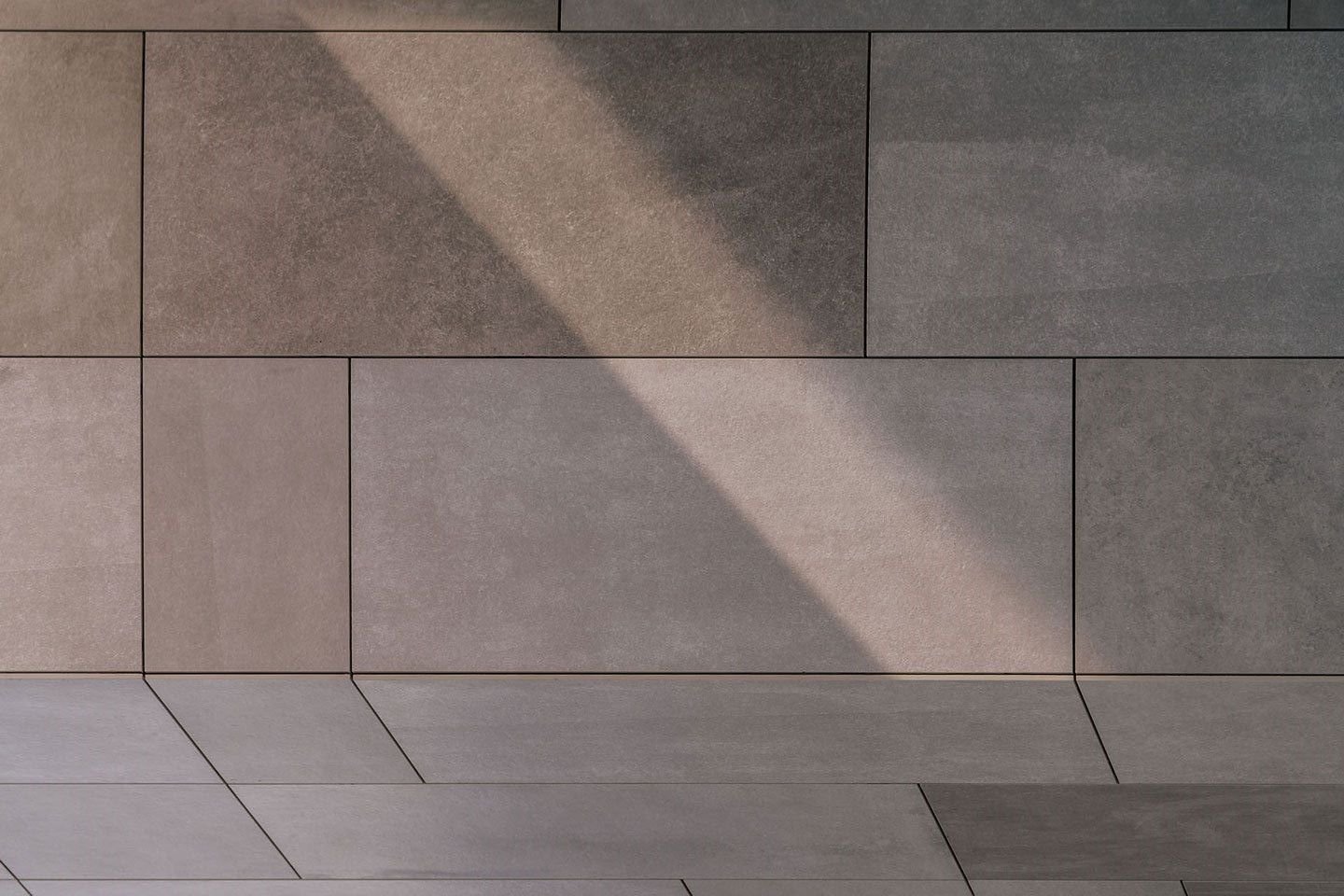
Best Flooring Types for Residential Villas
Choosing the right flooring for a villa requires balancing appearance, durability, maintenance, and the function of each space. Here are the most common options and where they work best.
Flooring plays a major role in the appearance, comfort, and durability of a residential villa. The best choice depends on the function of each space, the expected level of use, maintenance requirements, and the overall design style.
1. Porcelain Tiles
Porcelain is one of the most practical flooring options for modern villas. According to the Tile Council of North America, porcelain tile has a water absorption rate of 0.5% or less.
It is available in finishes that imitate marble, stone, concrete, terrazzo, and wood.
Best for: living rooms, dining areas, kitchens, corridors, bathrooms, and entrances.
Advantages:
Durable
Low water absorption
Easy to maintain
Available in large formats and many finishes
For bathrooms and exterior areas, always check the manufacturer's recommended area of use and slip-performance information.
Source: https://tcnatile.com/resource-center/faq/porcelain-vs-non-porcelain/
2. Natural Marble
Marble is widely used in luxury villas because of its natural veining and distinctive appearance.
It works especially well in entrances, formal living rooms, reception areas, staircases, and feature spaces.
Natural stone requires proper maintenance. The Natural Stone Institute recommends avoiding acidic cleaners on sensitive stones because they can damage the surface.
Source: https://www.naturalstoneinstitute.org/consumers/care/
3. Granite, Travertine, and Limestone
These natural stones are suitable when a villa requires a more natural and timeless character.
Granite is commonly selected for durability, while travertine and limestone are popular for their warm beige and earthy tones.
They may be used in entrances, living spaces, terraces, courtyards, and selected outdoor areas depending on the specific stone and surface finish.
The exact product should always be checked for its intended use.
4. Engineered Wood
Engineered wood is an excellent option for creating warmth in private spaces.
The National Wood Flooring Association explains that engineered wood expands and contracts less than solid wood flooring because of its layered construction.
Best for: bedrooms, dressing rooms, home offices, and family lounges.
It should still be used carefully in areas with frequent exposure to water or high moisture.
Source: https://woodfloors.org/types-of-wood-floors/
5. LVT and SPC
Luxury vinyl flooring such as LVT and SPC is commonly used when the project requires a wood or stone appearance with relatively simple maintenance.
Its performance varies between manufacturers, so technical specifications should always be checked.
Best for: bedrooms, playrooms, offices, and secondary residential spaces.
6. Terrazzo
Terrazzo is popular in contemporary interiors because of its distinctive decorative appearance.
It can be used in entrances, living spaces, corridors, and feature areas. Its final performance depends on the selected system, installation method, and finish.
7. Outdoor Flooring
Exterior flooring should be selected separately from interior flooring.
Common options include:
Exterior-rated porcelain
Suitable natural stone
Textured granite
Travertine or limestone
Concrete pavers
For exterior areas, consider slip resistance, drainage, heat exposure, weather conditions, and maintenance.
Which Flooring Works Best in Each Area?
For a practical villa flooring strategy:
Entrance: marble, granite, natural stone, or porcelain
Living and dining: porcelain or natural stone
Bedrooms: engineered wood
Kitchen: porcelain
Bathrooms: wet-area-rated porcelain or suitable stone
Outdoor areas: exterior-rated porcelain, stone, or paving systems
Common Mistakes
Avoid choosing flooring based only on appearance.
Also avoid using interior products outdoors, ignoring slip resistance, and failing to coordinate floor levels between different materials.
Physical samples should always be reviewed before final approval because renders cannot fully reproduce real texture, gloss, and material variation.
Conclusion
There is no single best flooring material for every villa.
Porcelain offers practicality and flexibility, marble and natural stone add luxury, engineered wood brings warmth, while terrazzo and vinyl provide additional design options.
The best selection should always balance appearance, durability, maintenance, location, and function.
References
Tile Council of North America — Porcelain vs. Non-Porcelain — https://tcnatile.com/resource-center/faq/porcelain-vs-non-porcelain/
Natural Stone Institute — Care & Cleaning of Natural Stone — https://www.naturalstoneinstitute.org/consumers/care/
National Wood Flooring Association — Types of Wood Floors — https://woodfloors.org/types-of-wood-floors/
Related articles

Astra 6 and 3D Design: Can AI Build Models Directly in Blender?
GPT-6 Astra introduces an important shift in AI-assisted 3D workflows: instead of only generating images, it can interact with software such as Blender and help create actual 3D scenes. Here is why this matters for architects and 3D designers.
Read article →
How to Write Professional AI Prompts for Architecture
A good architectural AI prompt is more than a description. Learn a simple prompt framework that helps architects communicate the project, task, design constraints and desired output more clearly.
Read article →
Bedroom Design: Comfort, Lighting, and Color Selection
A successful bedroom should combine comfort, practical lighting, balanced colors, and an efficient furniture layout. Learn the key principles for designing a relaxing and visually cohesive bedroom.
Read article →