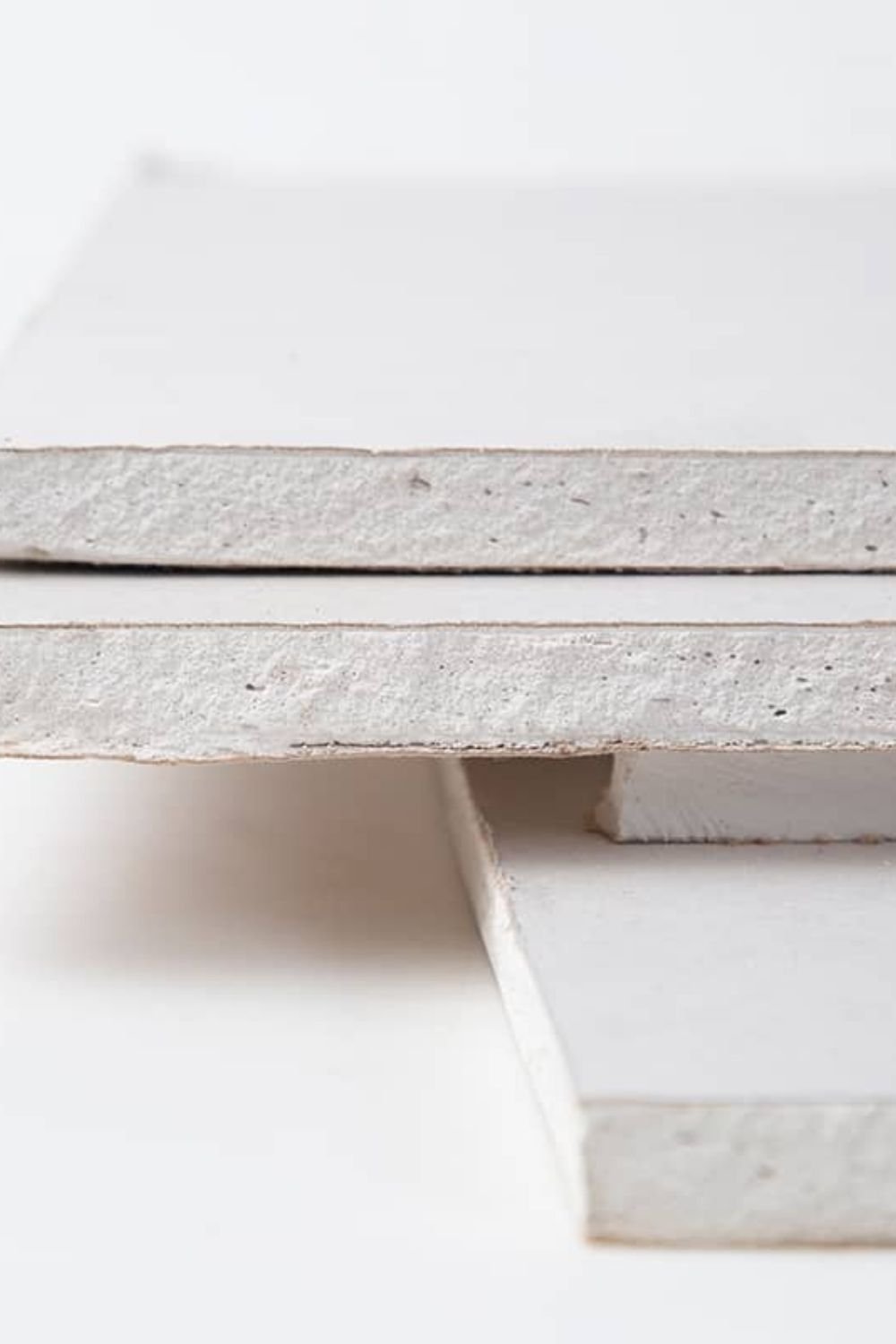
Gypsum Board: Types, Uses and How to Choose the Right Board
Gypsum board is widely used for interior walls, partitions and suspended ceilings. This guide explains the main types of gypsum boards, their applications and the key differences between standard, moisture-resistant and fire-resistant boards.
Gypsum board, also commonly known as drywall or plasterboard, is one of the most widely used materials for interior walls, partitions and ceilings. Its relatively quick installation and smooth finish make it practical for residential, commercial and many other interior projects.
However, gypsum boards are not all the same. Different boards are manufactured for standard areas, humid spaces, fire-rated systems, acoustic applications and other specialized requirements.
What Is Gypsum Board?
A typical gypsum board consists of a gypsum core faced with liners to create a relatively lightweight panel suitable for dry construction.
The boards are normally installed over metal or timber framing to form partitions, wall linings and ceiling systems. Once the joints and screw locations are properly finished, the surface can be prepared for the required decorative finish.
Knauf, for example, lists regular gypsum boards specifically for walls and ceilings, alongside specialized moisture-resistant and fire-resistant products.
Source: Knauf – Gypsum BoardsMain Types of Gypsum Board
1. Regular Gypsum Board
Regular gypsum board is the standard choice for dry internal areas where there are no special moisture or fire-performance requirements.
Common applications include:
Internal partitions
Wall linings
Bedrooms and living spaces
Offices
Suspended ceilings
Decorative ceiling details
It is generally the basic option for standard interior construction.
2. Moisture-Resistant Gypsum Board
Moisture-resistant boards are manufactured to reduce water absorption compared with standard boards. They are commonly considered for humid interior areas such as kitchens and bathrooms, depending on the complete system and exposure conditions.
They should not automatically be treated as waterproof boards. Areas directly and continuously exposed to water may require a different board or complete waterproofing system according to the project specification.
British Gypsum identifies moisture-resistant plasterboard as a specific performance board containing water-repellent additives in its gypsum core.
Source: British Gypsum – Plasterboard Selector Guide3. Fire-Resistant Gypsum Board
Fire-resistant gypsum boards contain additives such as mineral or glass fibres designed to improve the core's performance at high temperatures.
They are used as components of fire-rated partitions, ceilings, shaft walls and other assemblies where specified fire performance is required.
An important distinction is that the fire-resistance rating belongs to the complete tested system, not simply to an individual board. The framing, number and thickness of board layers, insulation, fixings and joint treatment can all affect system performance.
Source: Knauf GCC – Fire Safety for Gypsum Systems
4. Fire and Moisture-Resistant Board
Some projects require both enhanced fire and moisture performance. Combined boards are available for these situations.
Knauf, for example, specifies its Fire & Moisture Resistant boards for drywall partitions, shaft walls, ceilings and lining systems, including applications in wet and humid areas where enhanced fire protection is required.
Source: Knauf – Fire & Moisture Resistant Gypsum Board5. Acoustic and High-Performance Boards
Specialized gypsum boards are also available for enhanced acoustic performance, impact resistance, fixing strength and other requirements.
For example, British Gypsum's product range includes SoundBloc for enhanced sound insulation, alongside other boards designed for impact resistance and fixing performance.
Source: British Gypsum – Plasterboard Selector Guide
Common Uses of Gypsum Board
Gypsum board systems can be used for:
Interior partition walls
Suspended ceilings
Decorative ceiling features
Wall linings
Service and shaft enclosures
Concealing mechanical and electrical services
Creating niches and architectural details
Fire-rated wall and ceiling assemblies
Acoustic partition systems
This versatility makes gypsum board particularly useful when interior layouts or ceiling designs require relatively fast and flexible construction.
Choosing the Correct Board
The board should be selected according to the conditions of each space rather than using one type throughout the entire project.
For normal dry rooms, regular boards may be sufficient. Humid locations may require moisture-resistant products, while fire-rated areas require a complete tested fire-resistant system. Spaces requiring greater acoustic separation may need specialized boards together with insulation and an appropriate wall assembly.
Important Note
Board color is often used by manufacturers to distinguish different products, but color alone should not be used as the technical specification. Product classifications and colors can vary between manufacturers and markets.
Always check the manufacturer's current technical datasheet and the approved project specification before selecting a gypsum board.
Conclusion
Gypsum board is much more than a simple material for suspended ceilings. Modern gypsum systems can provide solutions for partitions, ceilings, moisture resistance, fire protection and acoustic performance.
The most important step is choosing the correct board and, where performance requirements such as fire or acoustics are involved, specifying the complete tested system rather than relying on the board alone.
Related articles
Travertine Stone: Characteristics, Uses, Advantages and Considerations
Travertine is a distinctive natural stone widely used in architecture and interior design. Learn about its formation, finishes, common applications, advantages, and the key considerations before specifying it for a project.
Read article →
Astra 6 and 3D Design: Can AI Build Models Directly in Blender?
GPT-6 Astra introduces an important shift in AI-assisted 3D workflows: instead of only generating images, it can interact with software such as Blender and help create actual 3D scenes. Here is why this matters for architects and 3D designers.
Read article →
How to Write Professional AI Prompts for Architecture
A good architectural AI prompt is more than a description. Learn a simple prompt framework that helps architects communicate the project, task, design constraints and desired output more clearly.
Read article →