Waterproofing Methods: Main Types and Applications in Buildings
Waterproofing protects buildings from water penetration and moisture-related damage. Learn the main waterproofing methods used for roofs, bathrooms, foundations, basements and other critical areas.
Waterproofing is an essential part of building construction. A correctly selected and installed system helps prevent water from penetrating roofs, bathrooms, basements, foundations and other areas exposed to moisture.
There is no single waterproofing method suitable for every location. The correct solution depends on the substrate, water exposure, movement, whether the membrane is exposed or protected, and the project's technical requirements.
Where Is Waterproofing Required?
Waterproofing is commonly considered in:
Flat roofs
Bathrooms and wet rooms
Balconies and terraces
Basements
Foundations and retaining walls
Swimming pools and water tanks
Podiums
Underground structures
Construction and movement joints
The detailing around drains, corners, joints and service penetrations is as important as the main waterproofing surface.
1. Bituminous Membranes
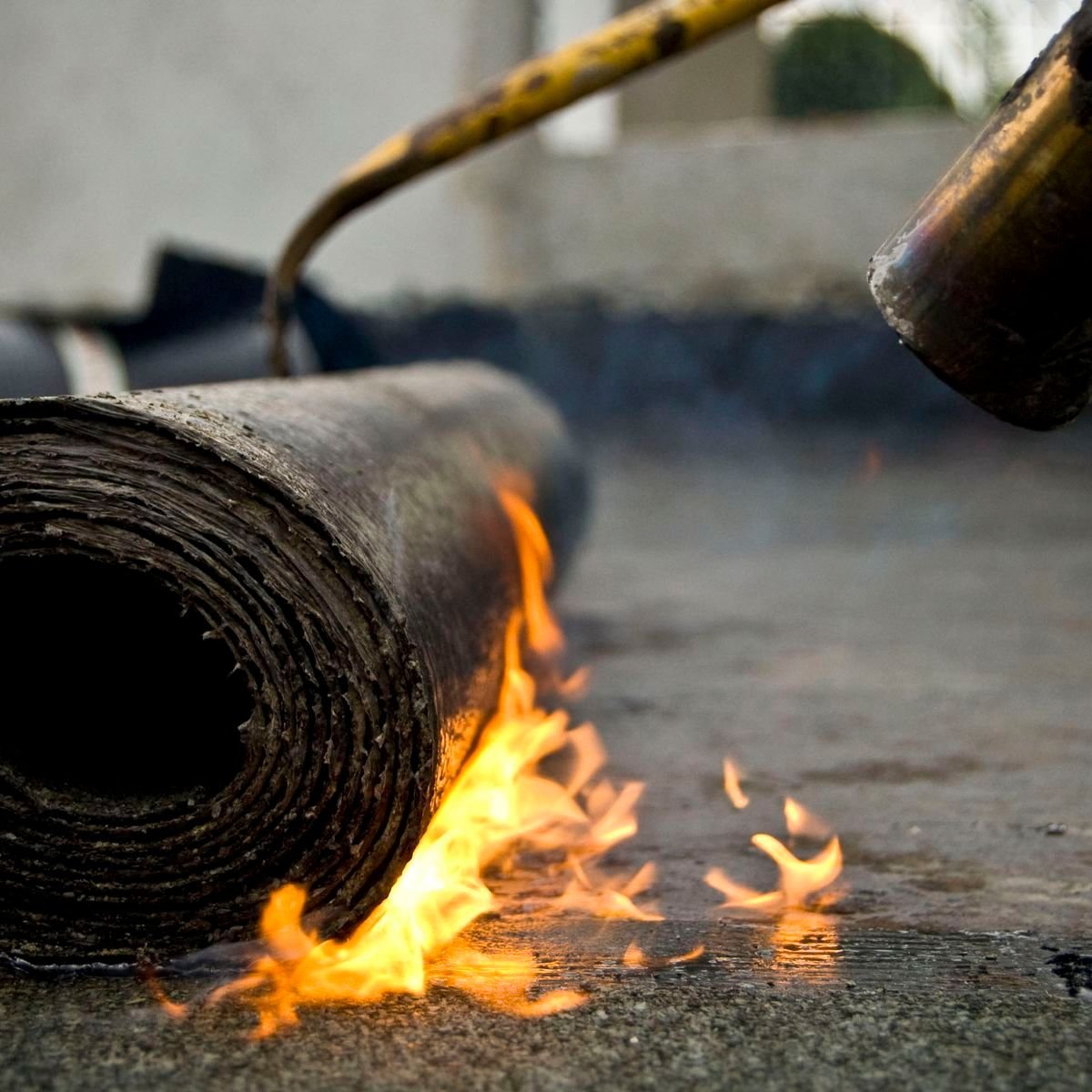
Bituminous membranes are among the established methods used for waterproofing roofs and below-grade structures. They are manufactured as sheets or rolls and may be installed using different methods, including torch-applied and self-adhesive systems.
Typical applications include:
Flat roofs
Foundations
Basements
Retaining walls
Balconies and terraces
Podiums
Underground parking structures
Sika identifies torch-applied and self-adhesive bituminous membranes among its waterproofing technologies and lists foundations, basements, podiums and other below-grade structures as typical applications.
Source: Sika – Bituminous Membranes for Below-Grade Waterproofing: https://www.sika.com/en/construction/waterproofing-systems/bituminous-membrane.html2. Liquid-Applied Waterproofing
Liquid waterproofing materials are applied to the substrate and cure to create a continuous membrane without the conventional joints found between sheet membranes.
Depending on the system, these may include polyurethane, acrylic and polyurea technologies.
Liquid-applied systems are particularly useful for surfaces containing many corners, penetrations and complicated details because the liquid can conform to the geometry.
Sika describes Liquid-Applied Membrane systems as fully bonded coatings that cure into an elastomeric waterproof membrane. They can be used for roofs and a range of other waterproofing applications.
Source: Sika – Liquid-Applied Membrane: https://www.sika.com/en/construction/roof-systems/liquid-applied-membrane.html3. Cementitious Waterproofing
Cement-based waterproofing systems are commonly used on concrete and masonry surfaces.
Depending on the specific product and system, applications can include:
Bathrooms and wet areas
Water tanks
Concrete structures
Masonry
Internal or protected waterproofing areas
Some cementitious systems are rigid, while others are polymer-modified to provide greater flexibility. Therefore, the exact product should be selected according to movement and exposure requirements.
Sika also produces cementitious waterproofing systems and admixtures designed to reduce the transmission of liquid water through cementitious materials.
Source: Sika – Cementitious Waterproofing: https://phl.sika.com/en/construction/waterproofing-systems/pond-and-pools/cementitious-waterproofing/sika-1.html4. Waterproof Concrete and Admixtures
Waterproofing can also be incorporated into concrete construction through the use of water-resisting admixtures and carefully designed watertight concrete systems.
However, adding a waterproofing admixture does not mean that joints, penetrations and cracks can be ignored.
Sika explains that watertight concrete requires a system approach: concrete impermeability is only one part of the solution, while joints, cracks and penetrations also need to be properly addressed.
Source: Sika – Watertight Concrete System: https://www.sika.com/en/knowledge-hub/watertight-concrete-system.htmlThis method is particularly relevant to:
Basements
Foundations
Underground structures
Water-retaining structures
Concrete tanks
5. Waterproofing Joints and Penetrations
Even a high-quality membrane can fail if joints and penetrations are poorly detailed.
Special waterproofing components may therefore be required around:
Construction joints
Expansion joints
Pipe penetrations
Floor drains
Wall-to-floor junctions
Cracks
Formwork tie holes
Waterbars, swelling profiles, joint sealants and specialized sealing systems can form part of the complete waterproofing strategy.
Sika's watertight concrete guidance, for example, identifies waterbars, swelling profiles and joint/crack sealing systems as components used to control water penetration at these critical locations.
Source: Sika – Watertight Concrete System: https://www.sika.com/en/knowledge-hub/watertight-concrete-system.htmlChoosing the Correct Waterproofing Method
The choice should be based on several factors:
Location of the waterproofing
Type of substrate
Expected water exposure
Structural movement and cracking
UV and weather exposure
Whether the membrane will remain exposed
Required protection layers
Compatibility with finishes
Ease of maintenance and repair
Manufacturer's installation requirements
For example, a basement retaining wall does not necessarily require the same system as a bathroom floor, and an exposed roof has different requirements from waterproofing installed underneath tiles.
Common Waterproofing Mistakes
Many waterproofing failures are related to detailing and workmanship rather than simply the selected material.
Common problems include poor substrate preparation, inadequate treatment of corners and joints, incorrect membrane overlaps, damage to the waterproofing during subsequent construction work and insufficient detailing around drains and penetrations.
Testing and inspection before covering the waterproofing system can help identify problems while they are still accessible.
Conclusion
The main waterproofing methods include bituminous membranes, liquid-applied membranes, cementitious systems and watertight concrete solutions. Each has different advantages and suitable applications.
Successful waterproofing depends not only on selecting a good product, but also on correct design, substrate preparation, detailing, installation and protection. The complete system should therefore be selected according to the location and technical requirements of the project.
Related articles

Astra 6 and 3D Design: Can AI Build Models Directly in Blender?
GPT-6 Astra introduces an important shift in AI-assisted 3D workflows: instead of only generating images, it can interact with software such as Blender and help create actual 3D scenes. Here is why this matters for architects and 3D designers.
Read article →
How to Write Professional AI Prompts for Architecture
A good architectural AI prompt is more than a description. Learn a simple prompt framework that helps architects communicate the project, task, design constraints and desired output more clearly.
Read article →
Bedroom Design: Comfort, Lighting, and Color Selection
A successful bedroom should combine comfort, practical lighting, balanced colors, and an efficient furniture layout. Learn the key principles for designing a relaxing and visually cohesive bedroom.
Read article →